Course Title: Introduction to Automobile Mechatronics
Duration: 2 Weeks (Monday – Friday)
Target Audience: Auto technicians, engineering students, or individuals seeking foundational knowledge in modern vehicle electronic systems.
Week 1: Fundamentals of Automotive Electronics and Components
Day 1: Introduction to Mechatronics & Basic Electrical Principles
- Morning (Theory):
- What is Mechatronics? (Integration of Mechanical, Electrical, Electronic, Computer Systems)
- Evolution of Electronics in Vehicles.
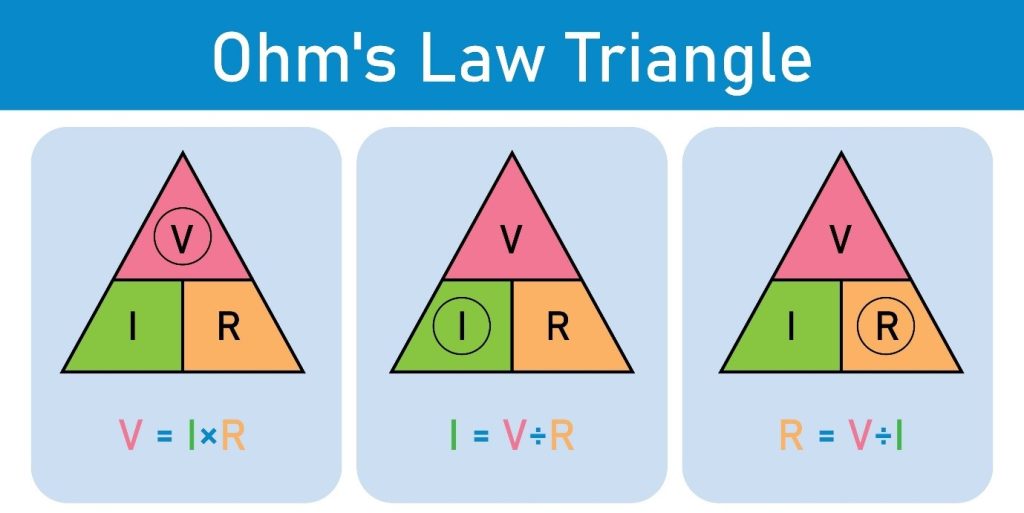
- Basic Electrical Concepts: Voltage, Current, Resistance (Ohm’s Law).
- Morning (Theory):
- Series and Parallel Circuits.
- Introduction to Automotive Wiring Diagrams: Symbols and Reading
Basics.
Afternoon (Practical)
- Using a Multimeter: Measuring Voltage, Current, Resistance,
Continuity.
- Building simple series/parallel circuits on a breadboard.
- Identifying basic electrical components.
Day 2: Automotive Electrical Systems & Basic Electronics
Morning (Theory):
- The Vehicle Battery: Types, Testing, Maintenance.
- Starting System: Components (Starter Motor, Solenoid) and Operation.
- Charging System: Alternator, Voltage Regulator, Operation.
- Basic Electronic Components: Diodes, Transistors, Relays – Function and Testing.
Afternoon (Practical):
- Battery testing procedures.
- Testing relays and diodes using a multimeter.
- Tracing simple starting and charging circuits on training boards/vehicles.
Day 3: Automotive Sensors – The Inputs
Morning (Theory):
- Role of Sensors in Mechatronic Systems.
- Types of Sensors:
- Position Sensors (Throttle Position Sensor – TPS, Crankshaft/Camshaft Position Sensor – CKP/CMP).
- Temperature Sensors (Engine Coolant Temp – ECT, Intake Air Temp – IAT).
- Pressure Sensors (Manifold Absolute Pressure – MAP, Fuel Rail Pressure).
- Speed Sensors (Wheel Speed Sensors – WSS, Vehicle Speed Sensor – VSS).
- Oxygen Sensors (O2S) / Air-Fuel Ratio Sensors (AFRS).
Afternoon (Practical):
- Identifying various sensors on training engines/vehicles.
- Testing common sensors (e.g., TPS, ECT) using a multimeter (resistance/voltage checks).
- Introduction to sensor signal types (Analog vs. Digital).
Day 4: Automotive Actuators – The Outputs
Morning (Theory):
- Role of Actuators in Mechatronic Systems.
- Types of Actuators:
- Solenoids (Fuel Injectors, Purge/Vent Solenoids, Transmission Solenoids).
- Motors (Throttle Body Motor, Fuel Pump, Wiper Motor, Radiator Fan Motor).
- Ignition Coils.
Afternoon (Practical):
- Identifying various actuators on training engines/vehicles.
- Testing basic actuators (e.g., checking injector coil resistance, activating a relay/solenoid).
- Understanding Pulse Width Modulation (PWM) concept for actuator control.
Day 5: Introduction to ECUs and Microcontrollers
Morning (Theory):
- What is an Electronic Control Unit (ECU) / Module?
- Basic ECU Architecture: Microprocessor, Memory (ROM, RAM, EEPROM), Inputs, Outputs.
- How ECUs process sensor data and control actuators (Input -> Process -> Output).
- Overview of different modules in a modern car (ECM, TCM, BCM, ABS Module etc.).
Afternoon (Practical/Demo):
- Locating different ECUs in vehicles.
- Demonstration of ECU communication (basic concept using a scan tool).
- Discussion on ECU power and ground requirements.
- Introduction to software and firmware in ECUs.
Week 2: System Integration, Diagnostics, and Future Trends
Day 6: On-Board Diagnostics (OBD-II)
Morning (Theory):
- History and Purpose of OBD-II.
- The Diagnostic Link Connector (DLC): Location and Pinout.
- Understanding Diagnostic Trouble Codes (DTCs): P, B, C, U codes; Pending vs. Confirmed.
- Freeze Frame Data.
- Readiness Monitors.
Afternoon (Practical):
- Connecting a generic OBD-II Scan Tool.
- Reading and clearing DTCs.
- Viewing Live Data PIDs (Parameter IDs) – e.g., Engine RPM, Coolant Temp, Throttle Position.
- Interpreting basic Freeze Frame data.
Day 7: Vehicle Networking – CAN Bus
Morning (Theory):
- Need for Networking in Vehicles.
- Introduction to Controller Area Network (CAN) Bus: Architecture (High-Speed, Low-Speed/Fault-Tolerant).
- How modules communicate: Messages, Identifiers, Data Frames.
- Other network types (briefly): LIN, FlexRay, Ethernet.
Afternoon (Practical/Demo):
- Identifying CAN Bus wiring (twisted pair).
- Measuring CAN Bus voltage levels (basic check with multimeter).
- Demonstration of network communication using a capable scan tool (viewing module lists, communication status).
- Basic CAN Bus troubleshooting concepts (shorts, opens, termination resistors).
Day 8: Engine Management Systems (EMS) Overview
Morning (Theory):
- Role of the Engine Control Module (ECM/PCM).
- Key Inputs (CKP, CMP, MAP, ECT, IAT, TPS, O2S).
- Key Outputs (Fuel Injectors, Ignition Coils, Throttle Actuator).
- Fuel Trim (Short Term Fuel Trim – STFT, Long Term Fuel Trim – LTFT) – basic concepts.
- Ignition Timing Control.
Afternoon (Practical/Demo):
- Using a scan tool to view key EMS live data PIDs.
- Observing sensor data changes and their effects (e.g., revving engine, watching RPM and injector pulse width).
- Demonstration of basic fuel trim interpretation.
Day 9: Chassis Control Systems & Intro to xEV
- Morning (Theory):
- Anti-lock Braking System (ABS): Components (Wheel Speed Sensors, Hydraulic Unit, ABS Module) and Operation.
- Electronic Stability Program (ESP) / Traction Control System (TCS): Integration with ABS, additional sensors (Steering Angle, Yaw Rate).
- Brief Introduction to Hybrid (HEV) and Electric Vehicle (EV) Mechatronics: High Voltage Systems, Battery Management Systems (BMS), Inverters, Electric Motors (concepts only, emphasizing safety).
- Morning (Theory):
Afternoon (Practical/Demo):
- Identifying ABS/ESP components on a vehicle.
- Using a scan tool to read wheel speed sensor data.
- Discussion and demonstration of High Voltage safety procedures for HEV/EV (visual identification, safety disconnects). (Safety focus is paramount here).
Day 10: Integrated Diagnostics & Future Trends
- Morning (Theory):
- Systematic Diagnostic Approach: Verify Complaint, Check Basics, Retrieve DTCs, Analyze Data (Scan Tool, Multimeter, Scope Basics), Isolate Fault, Repair, Verify Repair.
- Introduction to Oscilloscopes in Automotive Diagnostics (viewing sensor signals).
- Future Trends: ADAS (Advanced Driver-Assistance Systems), Vehicle-to-Everything (V2X), Over-the-Air (OTA) Updates, Increased Electrification.
- Afternoon (Review & Assessment):
- Q&A Session covering all topics.
- Short written assessment or practical skills evaluation (e.g., retrieving codes, testing a sensor).
- Course feedback and closing remarks.
- Morning (Theory):